Providence, RI · Garage Door Service
What Buying a Replacement Door Actually Means Here
Providence homes mostly date 1938-1989 with a 1970 median build year. Here's what that older framing and a cold, severe climate mean for picking a replacement door.
- Repairs & new doors
- Springs & openers
- Serving 7 nearby communities
How Local Conditions Play In
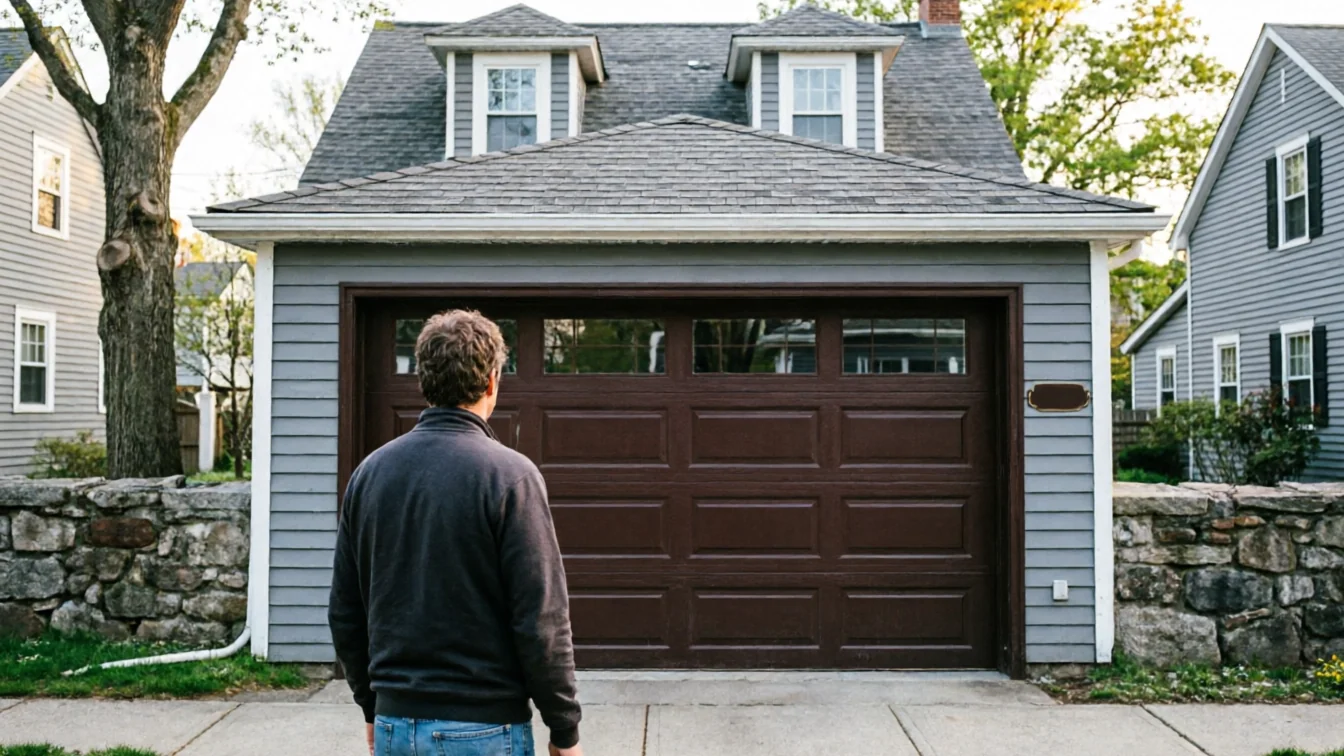
Most of the housing around here went up between 1938 and 1989, with the median landing around 1970. That's not a trivia point - it decides what fits in your opening. A lot of garages in neighborhoods like Mount Pleasant, Washington Park, and Edgewood were framed before manufacturers settled on today's standard widths and headroom clearances. Walk into a big box store with just the measurements off your tape and you can end up with a door that's an inch off, or a track kit that assumes headroom you don't have.
The 34 named areas across this service territory don't all share the same construction era or garage style - a detached single-car garage in Hope reads differently than an attached two-car setup near the Blackstone Boulevard Realty Plat Historic District. Buying a replacement door here means someone actually measures your rough opening, headroom, and backroom before you pick a model, not after. Skip that step and the door you liked in the showroom may need a custom jamb kit you didn't budget for, which is a common and avoidable cost on houses this age.
Where People Go Wrong
The mistake we see most is picking a door based on the photo on the box instead of the framing behind the opening. On a house built in the 1950s or 60s, the jambs and header were sized for whatever door was common then, and that's rarely a modern standard size. Buyers order online, the door shows up, and it either doesn't fit the track hardware already bolted to the studs or it fits but leaves gaps wide enough to feel the wind through.
The second mistake is treating insulation as optional because the sticker price looks better without it. In a climate band rated cold and severe, an uninsulated steel panel door will transmit cold straight into an attached garage, and if that garage shares a wall with living space, you feel it inside the house too. We won't pretend every home needs the top insulation tier - a detached garage used for storage doesn't need the same door as one with a laundry room on the other side of that wall. But guessing instead of asking costs more to fix later than it would have to spec right the first time.
The Seasonal Bit
Cold and severe is the climate band this area sits in, and that shapes two decisions on a replacement door: the insulation rating and the weatherstripping. Steel sandwich panels with a polyurethane core hold up better through repeated freeze-thaw cycles than single-layer steel, and the difference shows up as warping and seal failure a few winters sooner on the cheaper option.
Bottom seals and side weatherstripping matter more here than in a mild climate, because the material has to stay flexible through real cold, not just cool mornings. A seal that turns brittle at low temperatures cracks, and once it cracks it's letting in exactly the weather it was supposed to stop. We don't carry every weatherstrip grade on the market - we stick to what's rated for this climate band and skip the budget vinyl that's fine in a warmer region but not built for what winter does here.
What Is Going On
Across the service area there are roughly 322,110 households and about 144,813 owner-occupied houses, with a median household income near $99,359. That's a market with real buying power, and it shows in what people are willing to spend on a door that actually fits and insulates right rather than the cheapest option on the lot.
It also means replacement demand here isn't driven by new construction - it's driven by houses from the 1938-1989 window reaching the point where the original door, track, or opener is simply worn out. A door bought to match 1970s framing in good shape can still be the right call over a full reframe, which is usually the cheaper and faster path when the opening itself is sound. Where we draw the line is framing that's actually failed - rotted jambs or a header that's sagged - because no replacement door fixes that, and installing one on bad framing just moves the problem a few years down the road.
Frequently asked questions
Will a standard-size replacement door fit my garage if my house was built in the 1960s?
Sometimes, but you can't assume it. A lot of garages from that era were framed to dimensions that don't match today's standard door sizes. We measure the rough opening, headroom, and backroom before ordering anything, so you're not stuck with a door that needs a custom jamb kit after delivery.
Do I need an insulated door if my garage is detached?
Not necessarily. Insulation matters most when the garage shares a wall with living space or you use it as a workshop through winter. For a detached garage used mainly for storage, a non-insulated steel door rated for this climate can be the more sensible, lower-cost choice.
How do I know if it's my door or my framing that's the problem?
If the opening has visible rot, a sagging header, or jambs that are no longer square, that's a framing issue no replacement door will solve. We check the framing before quoting a door, because installing a new door on bad framing just means doing the job twice.
Related garage door services in Providence
More garage door guides
Book garage door service in Providence
Call now or request a quote - tell us what the door is doing and where you are.