
Providence, RI · Garage Door Service
Why Garage Doors in Providence Take a Beating From Cold and Age
Providence homes built mostly in the 1960s and 70s face cold winters that stress garage door seals, springs, and openers - here's what actually goes wrong.
- Repairs & new doors
- Springs & openers
- Serving 7 nearby communities
How Local Conditions Play In
Most of the housing stock in this service area went up between 1938 and 1989, with the median landing right around 1970. That's not a small detail - it means a lot of garages still carry the hardware they shipped with: steel torsion springs rated for a different era, openers with chain drives nobody services anymore, tracks bolted to framing that's shifted with sixty-plus years of settling. The same building wave shows up across the 34 named areas we work in, from the denser blocks near Downtown Providence out through North Providence, Cranston, and Johnston. Providence also sits in a climate band classed as severe cold, which matters more than people think for a door that's basically a big sheet of metal hanging on springs. Cold doesn't just mean snow load - it means daily contraction and expansion cycles that work bolts loose and dry out lubrication faster than milder climates. A door that's fine in October can bind by January, not because anything broke outright, but because tolerances that were already tight from age got tighter. We see this pattern often enough that we don't treat it as unusual - it's just what a 1960s-70s door does here, year after year.
Where People Go Wrong
The most common mistake is spraying lubricant on the track instead of the springs and rollers, which does nothing for the parts actually under load and leaves the track sticky enough to collect grit. The second is ignoring a slow start or a door that drifts down crooked - on hardware this old, that's usually a spring losing tension unevenly, and it gets worse, not better, on its own. Given how much of the stock here dates to the same twenty-year window, we also see a lot of mismatched repairs: a replacement spring rated for a lighter door than the one it's holding, installed because it was the size on hand rather than the size the door needs. On a 1970s double door that's heavier than most current steel models, that shortcut shows up again within a year or two. People also wait too long to deal with a cracked panel, figuring it's cosmetic - on an older door, a cracked panel usually means the reinforcement behind it has already started to go, and once that happens the whole section racks instead of sitting flat in the track. None of this is unique to any one street or neighborhood in the area - it's a function of age and load, and it plays out the same way whether the house is near Downtown Providence or out toward Greenville.
The Seasonal Bit
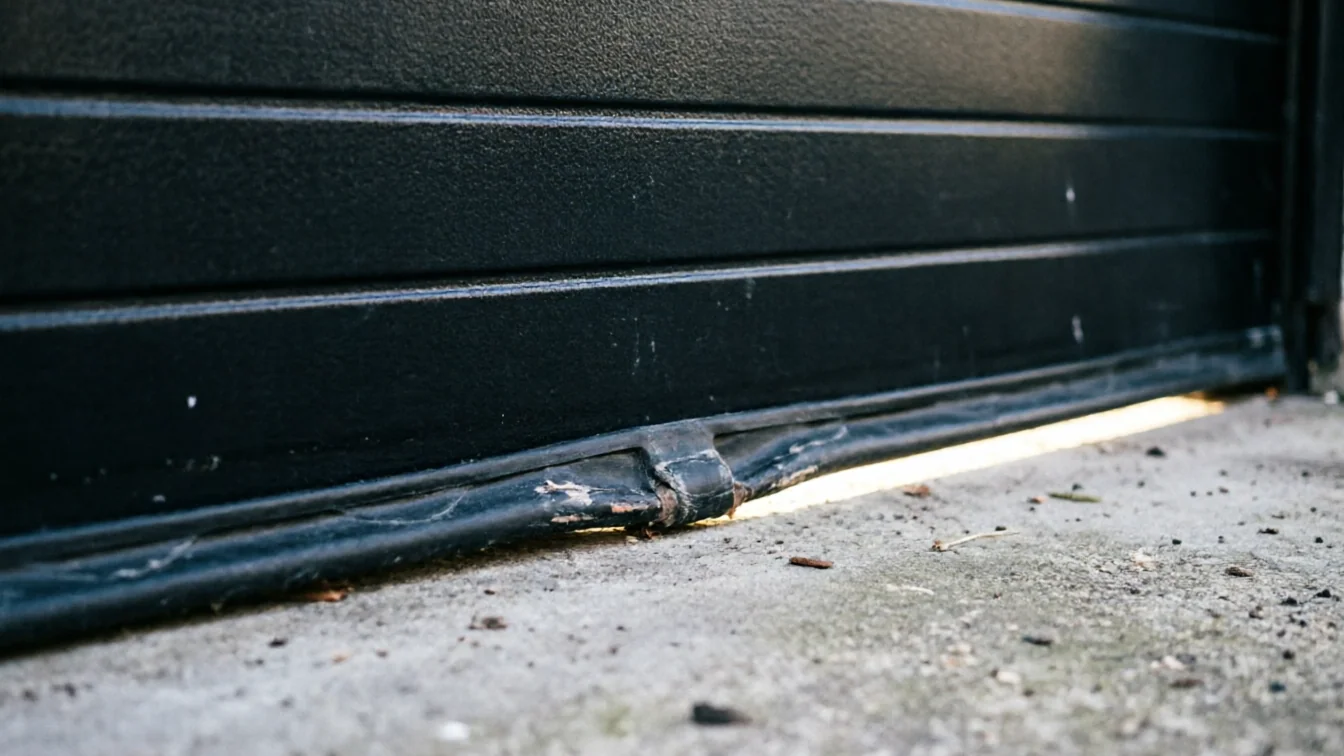
Cold is the variable that actually changes what we're called out for here. In a severe cold climate band, steel contracts enough through a winter that weather seals and drafts become the first complaint - a gap at the bottom panel that wasn't there in August is often just the door frame and the panel shrinking at slightly different rates. That's a seal problem, not a structural one, and it's usually the cheap fix. What's not cheap is what cold does to spring tension on hardware already pushing fifty or sixty years old. Metal fatigue accelerates in repeated freeze-thaw cycles, and a spring that was already near the end of its coil life can go from fine to snapped on a hard cold morning with no warning in between. We get more spring calls in the coldest stretch of winter than any other time of year, and it's not because people are opening their doors more - it's the metal itself giving out under conditions it's dealt with every winter since it was installed, until it finally doesn't. If your door has started groaning or hesitating only once the temperature drops, that's the tension talking, not just the cold.
What Is Going On
Put the pieces together and the pattern across this service area is pretty consistent: aging hardware, mostly original to construction in the 1938-1989 window, sitting in a climate that stresses metal harder than most of the country. That combination means repairs here skew toward springs, rollers, and seals more than, say, opener electronics, simply because the mechanical parts take the brunt of decades of cold cycling. We'll be honest about one limit - on doors from the earlier end of that build range, replacement parts for the original track or hinge style aren't always stocked anywhere, and sometimes a full hardware swap makes more sense than chasing an exact match that doesn't exist anymore. We'd rather tell you that upfront than quote a repair we can't actually deliver. With median household income in this area at $99,359, full replacement is often a real option when a repair would just delay the same failure, and that's worth knowing before you spend money twice. You can see more about what we handle at our site.
Frequently asked questions
Why does my garage door only act up in winter?
Providence falls in a climate band classed as severe cold, and steel garage door hardware contracts and expands more aggressively here than in milder regions. Springs under tension are especially sensitive to that cycling - a spring that's been weakening for years often fails specifically in the coldest stretch, not because of one bad day but because cold accelerates fatigue that was already underway.
My house is from the 1960s - is the original hardware still safe?
Not necessarily. A lot of houses across this service area date to the 1938-1989 building window, with the median around 1970, and original torsion springs and track hardware from that era are well past typical service life. We'd want to look at the actual spring and mounting before saying either way - age alone isn't a diagnosis, but it's a strong reason to get it checked rather than wait for a failure.
Is a drafty garage door a repair or a seal problem?
Usually it's seals, not structure. Cold causes panels and frames to contract at different rates, which opens gaps at the bottom or sides that weren't there in warmer months. That's typically a straightforward seal replacement. If the door is also sagging or binding in the track along with the draft, that points to something beyond the seal and is worth a closer look.
Related garage door services in Providence
More garage door guides
Book garage door service in Providence
Call now or request a quote - tell us what the door is doing and where you are.