Providence, RI · Garage Door Service
Garage Door Repair for Providence Homes
Providence Garage Door Pros repairs broken springs, openers, and tracks on the 1960s-70s doors common across Providence, built for cold New England winters.
- Repairs & new doors
- Springs & openers
- Serving 7 nearby communities
What You Pay
We don't post a flat number for garage door repair because the job changes with the door. A single torsion spring on a 1960s or 70s build, which is most of what's standing in Providence, costs less to fix than a double door with two springs and a worn cable drum. Panel age matters too: Providence's housing runs mostly 1938 to 1989 with a median build year around 1970, so a lot of doors still have original hardware that's been replaced piecemeal over the decades, and that mismatch adds time to a job.
We quote after we look at the door, not before, because guessing a price over the phone on a 50-year-old torsion setup usually means guessing wrong. Homeowners in this area, where the median household income runs around $99,359, tend to ask for the repair that actually needs doing rather than a full replacement they don't need yet - and that's usually the right call on these older doors. The honest limit here: if your track is bent in more than one spot or the opener is original to the house, replacement often costs less over time than another patch repair. We'll tell you straight if that's where you are.
How We Fix It
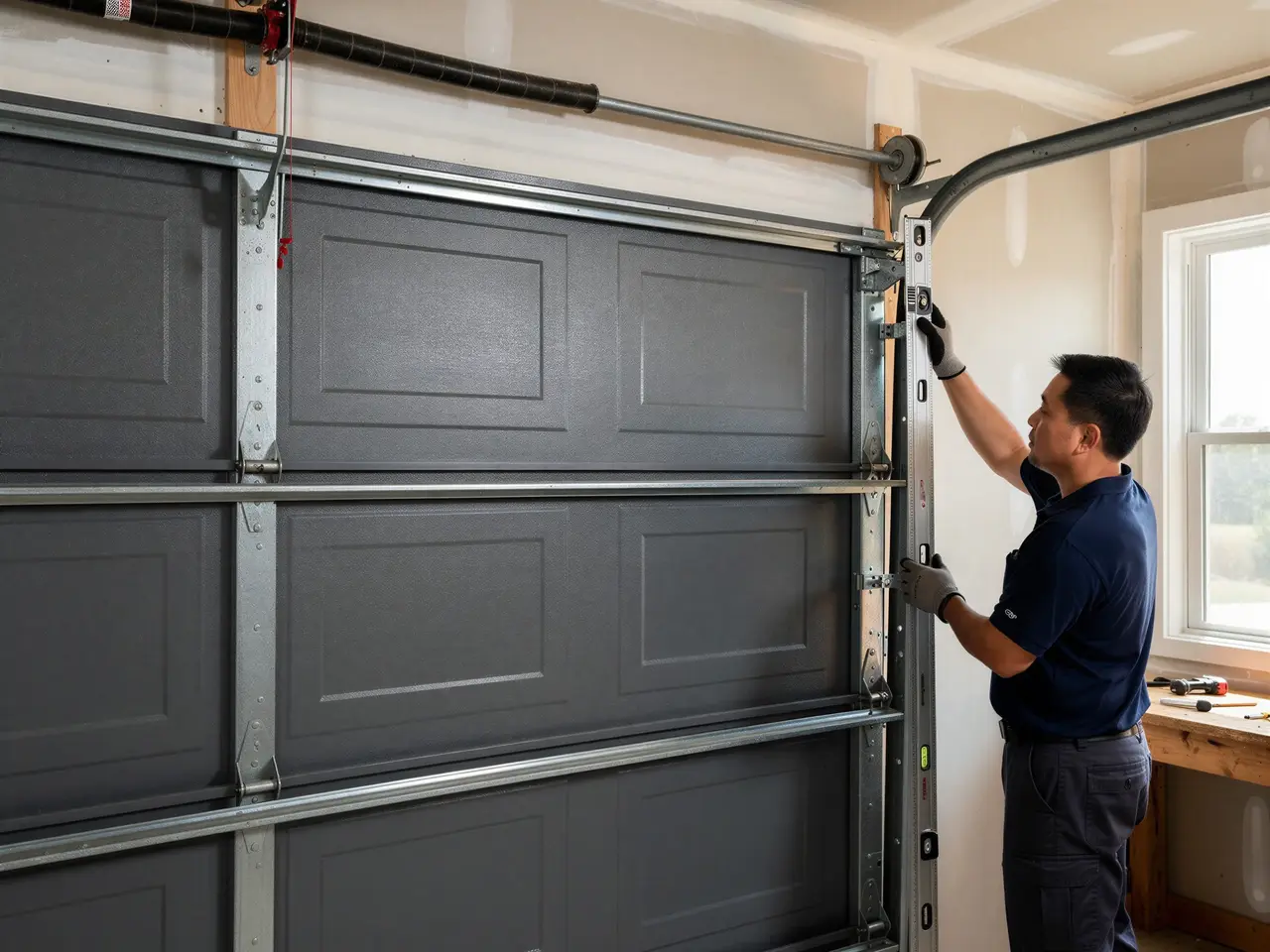
Most calls start the same way: the door won't open, or it opens unevenly and groans doing it. We check the springs first, since a broken or weakening torsion spring is the most common reason a door stops moving in this climate. If it's snapped, we match the new spring to the door's actual weight and wind cycle rating, not just whatever's closest in size - undersizing a spring on an older heavy wood or insulated steel door just means a repeat call next winter.
After the spring, we run the track, rollers, and cables. A lot of the 1960s-70s doors still on the street have steel rollers instead of nylon, and those bind up hard once cold settles into the track. We swap what's worn, lubricate what isn't, and check the cable drums for fraying, since a frayed cable under spring tension is the next thing to fail after a spring itself.
Opener adjustment comes last. Cold-severe winters here mean the force and limit settings drift as lubricant thickens and metal contracts, so a door that worked fine in October can start reversing or stalling in January without anything actually breaking.
What Causes It Around Here
Providence's housing stock is mostly 1938 to 1989 stock, with a median build year around 1970, and that's the root of almost every call we get. A door and opener installed when a house in Mount Pleasant or Washington Park went up has been through fifty-plus winters of expansion and contraction on the same torsion spring. Steel fatigues on a cycle count, not a calendar, and cold-severe weather here adds stress every time the metal contracts hard overnight and then has to flex again in the morning.
Across the 34 named areas we see this in, from Edgewood to Rumford to Hope, the pattern repeats: original torsion hardware, steel rollers instead of nylon, and openers that were never upgraded for cold-weather force settings. With 144,813 owner-occupied houses across the service area, a large share of them are carrying that same original setup, just at different stages of wear. It's not a defect in any one house. It's what happens when a lot of homes went up in the same twenty-year window and nobody's replaced the hardware since.
The Symptom
The classic sign is a door that drops fast partway down, or won't lift past a foot or two and the opener just hums. That's almost always a broken torsion spring, and on these older Providence doors it tends to happen on the first hard cold snap of the season, when overnight temperatures swing enough to stress metal that's already near the end of its cycle life.
A second pattern: the door opens but sags or racks to one side, scraping the track. That's usually one spring on a two-spring double door giving out while the other holds, which puts the whole door out of level. Left alone, it wears the track and rollers on the heavy side fast.
A third: the door reverses right after it starts closing, with no obvious obstruction. On original 1960s-70s openers, that's often a force setting that's drifted with the cold rather than a broken sensor. We check settings before we replace anything, since swapping a whole opener when it's a five-minute adjustment is money you didn't need to spend.
Frequently asked questions
Why did my spring break in cold weather and not before?
Steel springs fatigue on a cycle count, but cold makes each cycle harder on the metal. Providence sits in a cold-severe climate band, so overnight contraction adds stress on top of normal wear. A spring that's near the end of its life often lets go on the first real cold snap rather than gradually.
Is my door's hardware original?
If your house was built in the 1960s or 70s, which covers a lot of Providence's housing stock, there's a decent chance at least some of the torsion hardware is original or close to it. Steel rollers instead of nylon and a single spring on a double door are both signs of original equipment.
Should I repair or replace an older door?
If the spring, cable, or roller failure is isolated and the track is straight, repair usually makes sense. If the track is bent in multiple places or the opener is original to a 1960s-70s build, replacement often costs less over the next few years than repeated patch repairs.
Related services
Related guides
By Neighborhood
Garage Door Repair across the Providence area
We also handle garage door repair in these Providence-area suburbs.
Book garage door service in Providence
Call now or request a quote - tell us what the door is doing and where you are.