Providence, RI · Garage Door Service
Garage Door Repair in Pawtucket, RI
Pawtucket's median home dates to 1947, decades older than the area norm. We drive the 4 miles from Providence to fix the original springs, tracks, and openers still running on these houses.
- Repairs & new doors
- Springs & openers
- Serving 7 nearby communities
What You Pay
We don't quote a number here because every job on a Pawtucket door depends on what's actually inside the header. A house built in 1947 is older than the typical build across the wider service area, where the median sits around 1970 - and that twenty-plus year gap matters. A spring or hinge from a house that age is more likely to be a size nobody stocks on the truck, which means a return trip instead of a one-visit fix. Median household income in Pawtucket runs $67,436, well under the $99,359 median for the full service area, and that's part of why we always walk through repair-versus-replace honestly before cutting into anything. Fixing a worn torsion spring or a bent track almost always costs less than swapping the whole door, but if the door itself is an original 1940s wood panel door that's been painted shut twice and reframed once, replacement can be the cheaper call over five years, not the more expensive one. We'll tell you which situation you're in before we start, not after the invoice.
How We Fix It
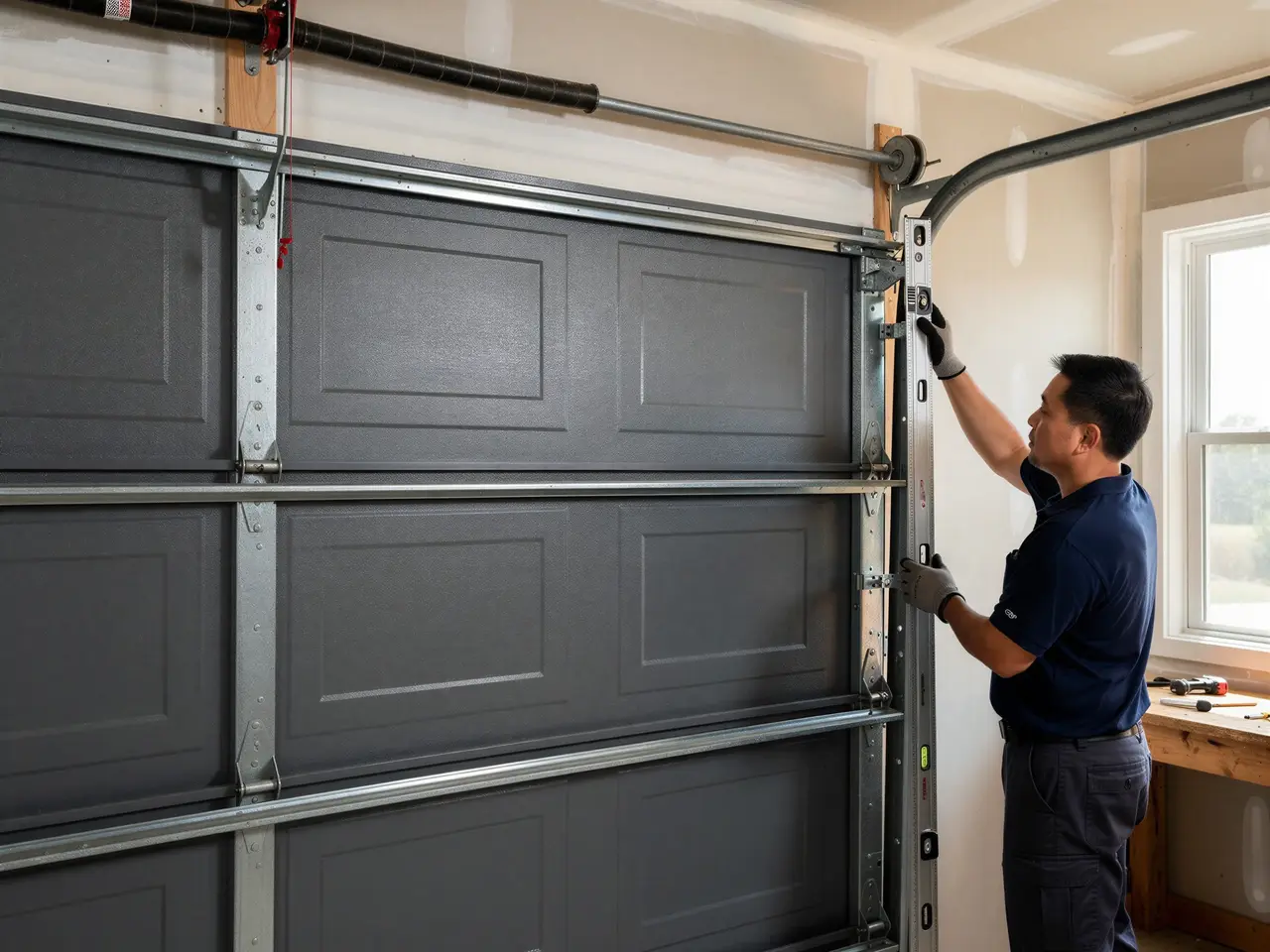
We come from Providence, about 4 miles out, so there's no local depot or branch to mention - the truck is dispatched same as any other call in the service area. On site, the first thing we check on an older Pawtucket door isn't the opener, it's the track alignment and the condition of the jamb hardware, because houses from the 1940s were framed before anyone standardized garage door rough openings. That means tracks are sometimes shimmed or offset in ways a newer install never would be. We re-torque or replace the spring to match the door's actual weight rather than guessing off a chart built for modern steel doors, since a lot of what's still hanging in Pawtucket garages is heavier old-growth wood or early hollow-core steel. We test the opener's force settings against that real weight, not a factory default, because a safety reversal that doesn't trip is the single most common thing we find wrong on a service call here.
Parts We Carry
The truck carries the sizes that move fastest across the service area's 1960s-70s housing stock, which is most of what's out there. Pawtucket is the exception that needs planning ahead: a door original to a 1947 build can have a spring wire diameter, drum size, or hinge gauge that stopped being standard decades ago. When that's the case, we tell you on the spot rather than forcing a part that's close enough - close enough on a torsion spring means it fails early, sometimes violently. Rollers, cables, and standard extension springs we carry regardless of house age. What we don't carry, and won't pretend to, is obsolete OEM opener boards for openers that are themselves older than the 1970 median build year across the area - at that point you're buying a new opener, not a part.
Where This Job Goes Sideways
The honest failure point on an older Pawtucket door is the jamb, not the spring. Houses built around 1947 often have wood framing around the garage opening that's taken seventy-plus years of freeze-thaw cycles in a climate zone the federal data lists as severe cold. Lag screws that held fine in 1960 can be sunk into wood that's gone soft at the core, and you don't find that out until the new hardware pulls loose under tension a week later. We check jamb condition before we mount anything, but if the wood's compromised, that's carpentry, not garage door work, and we'll say so rather than bolt a spring bracket into punk wood and call it done. That's the one limitation we're upfront about: we fix the door system, we don't rebuild a rotted frame.
What Causes It Around Here
Two things stack on top of each other in Pawtucket. First, the age of the housing stock - a median build year of 1947 means a lot of these doors and their hardware have never been fully replaced, just patched piece by piece over decades. Second, the climate: this region sits in a severe cold band, and cold steel contracts, which fatigues torsion springs faster than a mild climate would. Put those two together and you get springs that were already near the end of their rated cycle life failing a season or two earlier than they would on a newer door. We also see more broken rollers here than in newer-stock neighborhoods, because steel rollers original to a 1940s-50s install were never swapped for nylon, and steel-on-steel in cold weather is loud and wears faster.
Doing It Yourself
A torsion spring under tension can break a wrist or worse, and that risk doesn't change whether the door's from 1947 or last year. What does change on an older Pawtucket door is that you often can't tell the spring's wind count or wire gauge just by looking, since nothing's stamped on hardware that old the way it is on modern springs. Swapping a roller or lubricating a track is reasonable DIY work. Touching the spring, the cable drums, or anything under tension on a door this old isn't, because a mismatched replacement part can fail in a way a correctly sized one wouldn't. If the door is sticking or slamming, that's worth a call before it's worth a trip to the hardware store.
Frequently asked questions
Is my garage door too old to repair?
Not usually. A door from the 1940s can still be fixed if the panel and frame are sound - the issue is almost always the spring or track hardware, which we can source or rebuild to match. We only recommend replacement when the frame itself has degraded or when continuing to find obsolete parts stops making financial sense.
Do you have a branch in Pawtucket?
No. We run out of Providence, about 4 miles away, and dispatch the truck to Pawtucket the same as any other call in the service area. There's no local depot to mention, just the drive.
Why do Pawtucket garages seem to need more spring work than newer neighborhoods?
Two reasons stack up: the housing here is older on average, built around 1947, so more original hardware is still in service, and the region's severe cold climate fatigues torsion springs faster than a mild one would. Older springs plus cold-weather wear means more failures per house over time.
Should I replace the whole door or just fix what's broken?
Depends on the door. If it's a sound panel with a worn spring or roller, repair almost always makes more sense. If the door itself is the original 1940s unit with a damaged frame or jamb, replacement can be the better long-term call - we'll tell you honestly which situation yours is before any work starts.
More garage door services in Pawtucket
Book garage door service in Providence
Call now or request a quote - tell us what the door is doing and where you are.