
Providence, RI · Garage Door Service
Garage Door Maintenance, Pawtucket RI
Pawtucket's median household income sits well below the Providence-area average, which changes the repair-or-replace math on doors built when the city's housing went up.
- Repairs & new doors
- Springs & openers
- Serving 7 nearby communities
What You Pay
Pawtucket's median household income is $67,436, well under the $99,359 median across the wider Providence service area. That gap matters more here than almost anywhere else we work, because it sets where the repair-or-replace line actually falls. On a $99,359 income, swapping a worn opener and springs for a new door is an easy call. On $67,436, the math tightens, and a lot of Pawtucket jobs come down to fixing what's there instead of replacing it outright.
We don't quote a flat number on this page because every door is different - a spring job and a full door swap aren't priced the same, and we're not going to pretend they are. What we will say is that maintenance - lubrication, hardware checks, balance adjustments - costs a fraction of either repair or replacement, and it's the thing most owners here skip until something breaks. If you're on a 1940s house with original hardware, catching a worn cable or a cracked roller during a maintenance visit is cheaper than the emergency call that follows if you don't.
How We Fix It
We travel into Pawtucket from Providence, 4 miles out, so we're not swinging by on a whim - when we come, we check the whole system, not just the symptom you called about. On a torsion spring door, that means checking spring tension, cable wear, roller condition, and the track alignment, because on houses from the late 1940s the opener is often newer than the door itself, bolted onto hardware it was never designed to lift.
Maintenance here is less about new parts and more about catching fatigue before it snaps. A cable that's frayed at the drum, a bottom bracket that's started to pull loose, a spring that's lost a quarter-turn of tension - none of that stops the door from opening today, but all of it is a near-term failure. We tighten, lubricate, and rebalance, and we tell you honestly if a part has maybe a season left in it rather than waiting for it to fail on your schedule instead of ours.
Parts We Carry
What's on the truck matters more in a city like Pawtucket, where a meaningful share of the housing dates to the late 1940s, than in a neighborhood full of 2005 production. Standard torsion springs, extension springs, nylon and steel rollers, cables, and the common opener drive parts cover most calls. What we don't carry is the oddball stuff - a one-piece door track bracket or a discontinued low-headroom hardware kit specific to an original 1940s install sometimes has to be special-ordered, and that's a limitation worth saying out loud rather than pretending every part shows up same-day.
If your door is original to a house built right after the war, part of a maintenance visit is just identifying what you've actually got, because the hardware spec changed more than once between 1938 and 1989, and guessing wrong wastes a trip for both of us.
Where This Job Goes Sideways
The failure mode we see most in Pawtucket is a door that looks fine and isn't. On older torsion setups, a spring loses tension gradually, so the opener compensates by working harder - and the opener, usually the newer component, takes the blame while the spring is the actual problem. Owners replace an opener and the door still struggles.
The other way it goes sideways is cold-weather binding. This region sits in a severe cold climate band, and on a house with 1940s-era clearances and an insulated door added later, the panel can swell or bind at the jamb in deep cold, straining the track and the opener's force sensors. If a door's been fighting itself every January for a few years, that's not a maintenance item anymore, it's a hardware mismatch, and no amount of lubrication fixes it.
What Causes It Around Here
Pawtucket's housing stock runs older than the surrounding towns in a lot of cases - the median year built here is 1947, against a broader service-area median closer to 1970. That matters for maintenance because a door and track system from the late 1940s was built for a lighter, uninsulated single panel, and most of those have been retrofitted at some point with a heavier door or an added opener that the original hardware wasn't sized for.
Add in the severe cold winters this whole area gets, and the combination is specific: older track spacing, older jamb clearances, and heavier modern doors fighting seasonal swelling and contraction. That's a different failure pattern than you'd get on a 1980s build with factory-matched hardware, and it's why a maintenance check here tends to focus on fit and tension rather than just wear.
Doing It Yourself
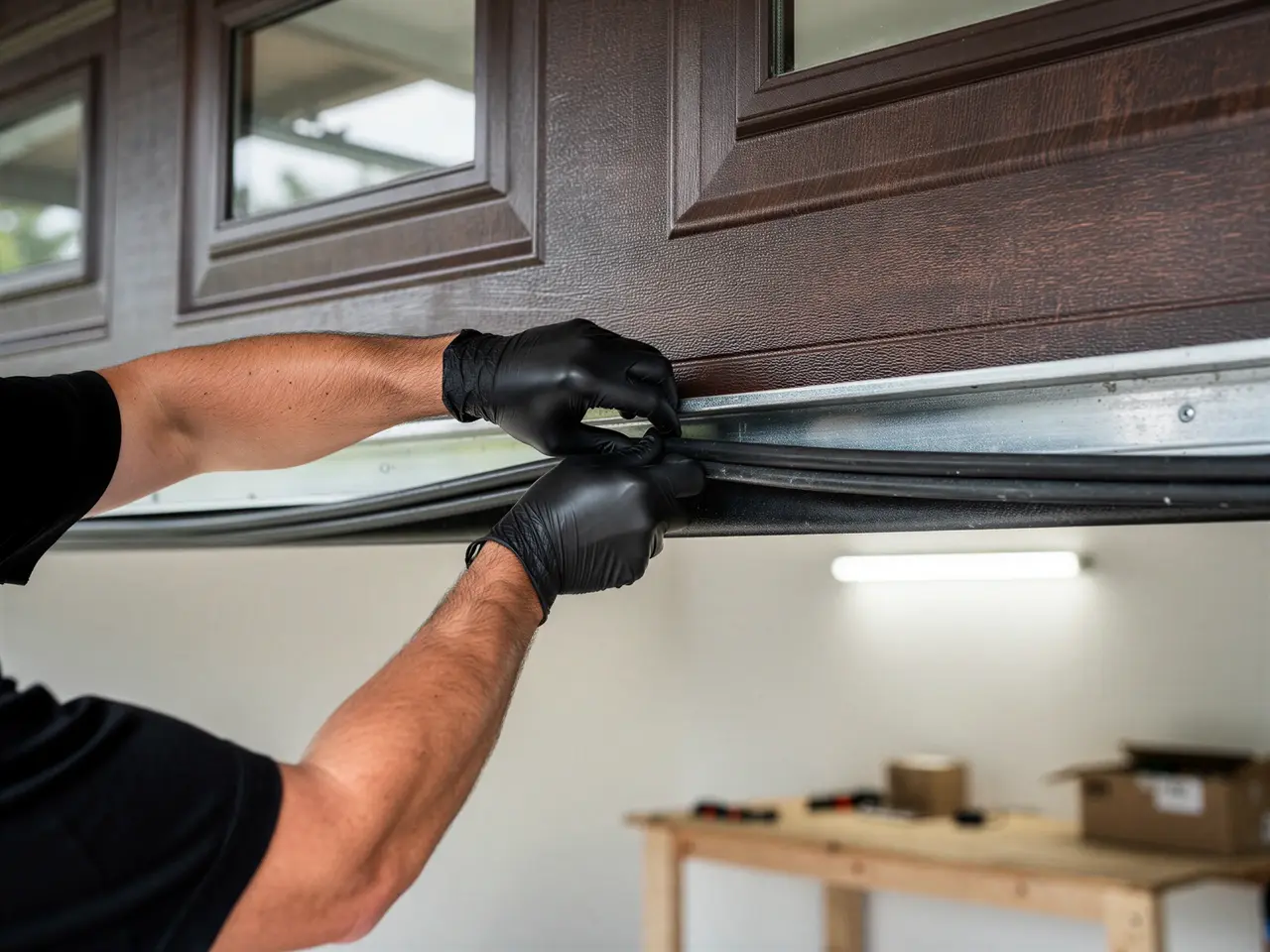
Lubricating rollers and hinges with a garage-door-specific lubricant, checking that the door reverses properly when it hits an obstruction, and visually inspecting cables for fraying are all things an owner can do without a ladder emergency. Tightening loose bolts on the track brackets is fine too, as long as you're not touching anything near the spring itself.
What you shouldn't touch: the torsion spring, period. It's under enough tension to cause a serious injury, and on an older door where the spring size may not match anything on a hardware store shelf, there's no DIY version of that job that ends well. If your door is sticking, binding, or making a new noise, that's the point to call rather than the point to keep adjusting it yourself.
Frequently asked questions
Why does my opener keep straining even though it's newer than the door?
On older torsion setups, the spring loses tension slowly over years, and the opener motor compensates by working harder. The opener gets blamed because it's the part making noise, but the spring is usually the real problem. A maintenance check measures spring balance separately from opener performance so you're not replacing the wrong part.
Is it worth replacing a door that's original to a 1940s house?
It depends on condition, not age alone. Some original doors are structurally fine and just need hardware service. Others have been retrofitted with heavier panels the original track wasn't sized for, which is a real replacement case. We'd rather check it in person than guess from a phone call.
Do you keep a truck in Pawtucket?
No. We run out of Providence and cover Pawtucket from there, about 4 miles out. There's no local branch here, just a short drive for every call.
More garage door services in Pawtucket
Book garage door service in Providence
Call now or request a quote - tell us what the door is doing and where you are.