
Providence, RI · Garage Door Service
Garage Door Maintenance in Providence, RI
Garage door maintenance in Providence, RI: tune-ups built around the 1960s-70s housing stock and cold winters that wear out springs, tracks, and openers fast.
- Repairs & new doors
- Springs & openers
- Serving 7 nearby communities
What You Pay
We don't post a flat number here because the right maintenance visit depends on what's actually on your door - a single torsion spring system on a 1970s steel door costs less time than a double door with two openers and a keypad. What we can tell you is that in a service area built mostly between 1938 and 1989, with most homes dating to the 1960s and 70s, the parts that show up worn are predictable: spring tension, roller wear, and hinge play on hardware that's often original. A maintenance visit is cheaper than an emergency spring call, and it's cheaper than replacing an opener motor that's been straining against bad tension for years. If your door was installed in the last decade, the visit is quick. If it's original to a house from that build era, expect us to spend more time on spring adjustment and track alignment. We'll tell you on site if something's past tuning and into replacement territory - stretching a tune-up to avoid a repair that's actually needed just costs you twice.
How We Fix It
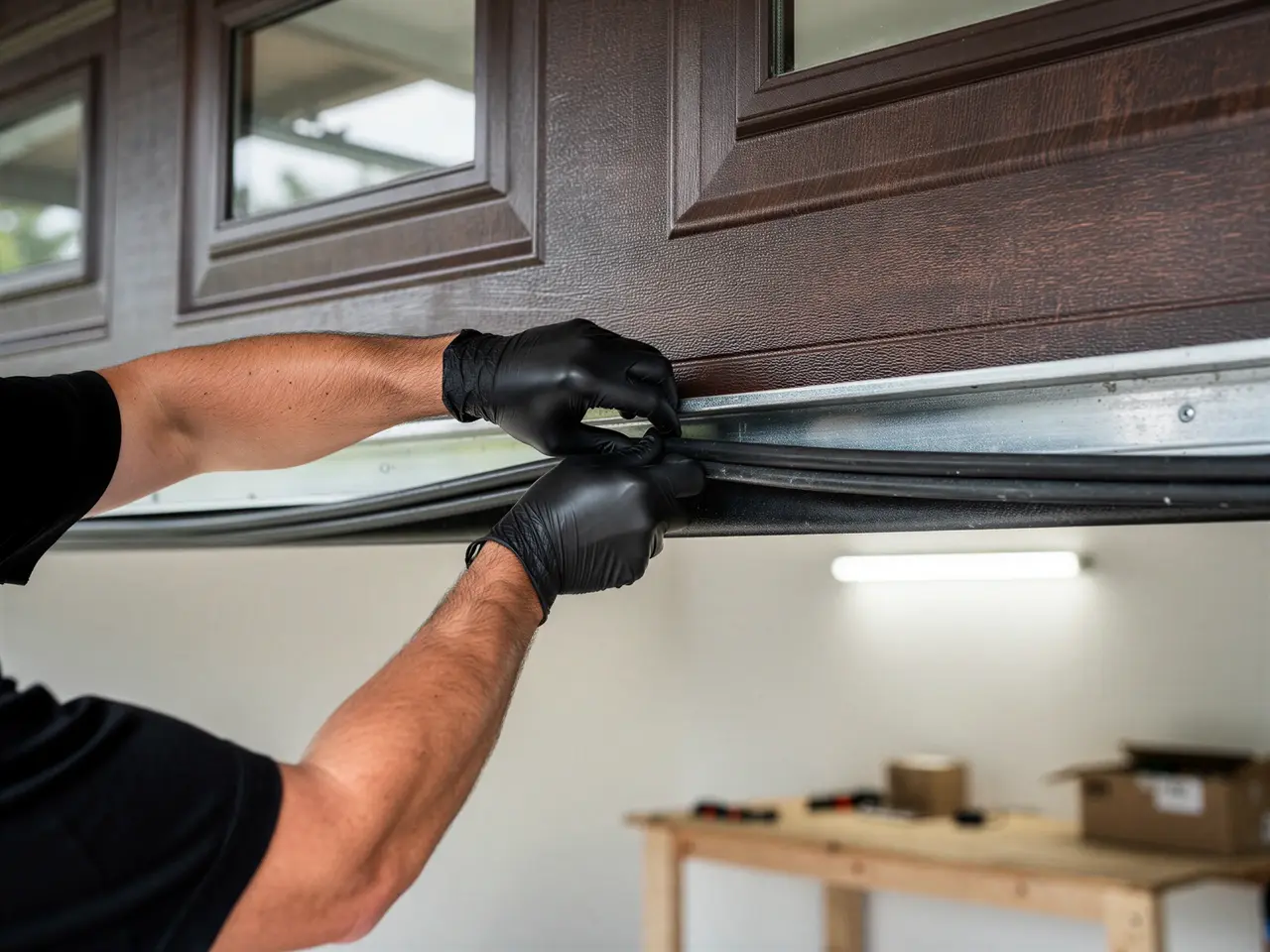
A maintenance visit starts with the spring system, because torsion springs lose tension gradually and most owners never notice until the opener starts straining. We check balance by disconnecting the opener and lifting the door by hand - a properly tensioned door should hold still at waist height. From there we go down the track: rollers for flat spots or cracking, hinges for play, the bottom bracket and cables for fraying, and the opener's force and travel limits. Across a service area with 144,813 owner-occupied houses and 322,110 households total, we see the same wear pattern again and again because the housing stock is so consistent in age. We lubricate moving parts with the right lubricant for the temperature swings here, not a one-size product, and we tighten the hardware that loosens from repeated freeze-thaw cycling. We don't replace parts that don't need replacing during a maintenance visit - if a roller still has life in it, it stays. The honest limitation: a tune-up won't fix a spring that's already cracked or a cable that's already frayed past the point of adjustment. Those are repair calls, not maintenance, and we'll say so rather than charge you for a service that won't hold.
What Causes It Around Here
Providence sits in a cold, severe winter band, and that matters more to a garage door than most owners realize. Steel contracts in the cold, torsion springs lose a measurable amount of tension as temperature drops, and the lift that felt fine in August can leave an opener straining by January. That strain is what burns out drive gears and capacitors years before they should fail. Layer that climate on top of a housing stock built mostly between 1938 and 1989 - with the bulk from the 1960s and 70s across the 34 named areas in this service area - and you get doors original or near-original to houses that age, often on hardware nobody stocks new anymore. A door installed in 1968 wasn't engineered with modern torsion tolerances, and forty-plus winters of freeze-thaw cycling on steel track brackets loosens fasteners in a way that doesn't happen in a milder climate. That combination - old hardware, cold-climate stress - is why maintenance here isn't optional the way it might be in a warmer market. It's catching the slow failures before a cold morning turns them into a stuck door.
The Symptom
Most calls start the same way: the door is slower than it used to be, or the opener makes a new noise - a grinding on the way up, a hum that lasts a beat too long before the door moves. Some owners notice the door won't stay up when disconnected from the opener by hand, which almost always means the torsion spring has lost tension, a gradual process that speeds up in cold weather. Others see uneven movement, one side dropping faster than the other, which points to a roller or cable issue rather than the spring. On older doors common to this area's 1960s-70s building stock, you'll sometimes hear a rattle at the bottom panel where the bracket has worked loose over decades of seasonal expansion and contraction. None of these are emergencies on their own. They're the early signs that show up months before a spring actually breaks or a cable snaps, and they're exactly what a maintenance visit is built to catch while it's still cheap to fix.
Frequently asked questions
How often should I get my garage door serviced in Providence?
We don't have a universal number that fits every door, but given how cold our winters run and how much of the local housing stock dates to the 1960s and 70s, an annual check before winter catches most of the tension and hardware issues before they turn into a stuck door on a freezing morning.
Does maintenance fix a door that won't stay up?
Often, yes - a door that won't hold position when lifted by hand usually means the torsion spring has lost tension, which a maintenance adjustment can correct. If the spring is already cracked or the cable is frayed, that's a repair, not a tune-up, and we'll tell you which one you're looking at on site.
Is maintenance worth it on an older door?
On a door original to a house built in the 1960s or 70s, which is common across this service area, maintenance is usually the cheapest way to keep original hardware running. We'll let you know honestly if the door has reached the point where tuning it costs more than it's worth.
By Neighborhood
Maintenance across the Providence area
We also handle maintenance in these Providence-area suburbs.
Book garage door service in Providence
Call now or request a quote - tell us what the door is doing and where you are.