Providence, RI · Garage Door Service
Garage Door Maintenance for West Warwick's 1960s Housing Stock
West Warwick homes date mostly to 1967, a decade ahead of the Providence-area norm. See what that means for spring wear, rollers, and the cost of a tune-up here.
- Repairs & new doors
- Springs & openers
- Serving 7 nearby communities
What Causes It Around Here
Most garages in West Warwick went up around 1967, which puts this town ahead of the curve compared to the newer pockets closer to Providence that filled in through the 1970s and 80s. That matters because a door built in 1967 almost never has its original hardware swapped out piece by piece - homeowners replace a broken spring or a dead opener motor when it fails, and leave everything else alone. So what we find in a lot of these garages is a mix: a newer opener bolted onto a 50-plus-year-old track, or a torsion spring that's been re-tensioned once but never replaced. With roughly 14,350 households in town, that pattern repeats a lot more than owners expect. Add in winters that sit in the cold, severe end of the climate band for this part of the state, and you get steel hardware that's been through decades of freeze-thaw cycling it was never rated to handle indefinitely. Rollers go brittle, cable ends fray at the drum, and the galvanized coating on older springs wears thin enough that corrosion starts from the inside of the coil out. None of this shows up as a sudden failure most of the time - it shows up as a door that's gotten louder, slower, or harder to lift by hand over a year or two.
How We Fix It
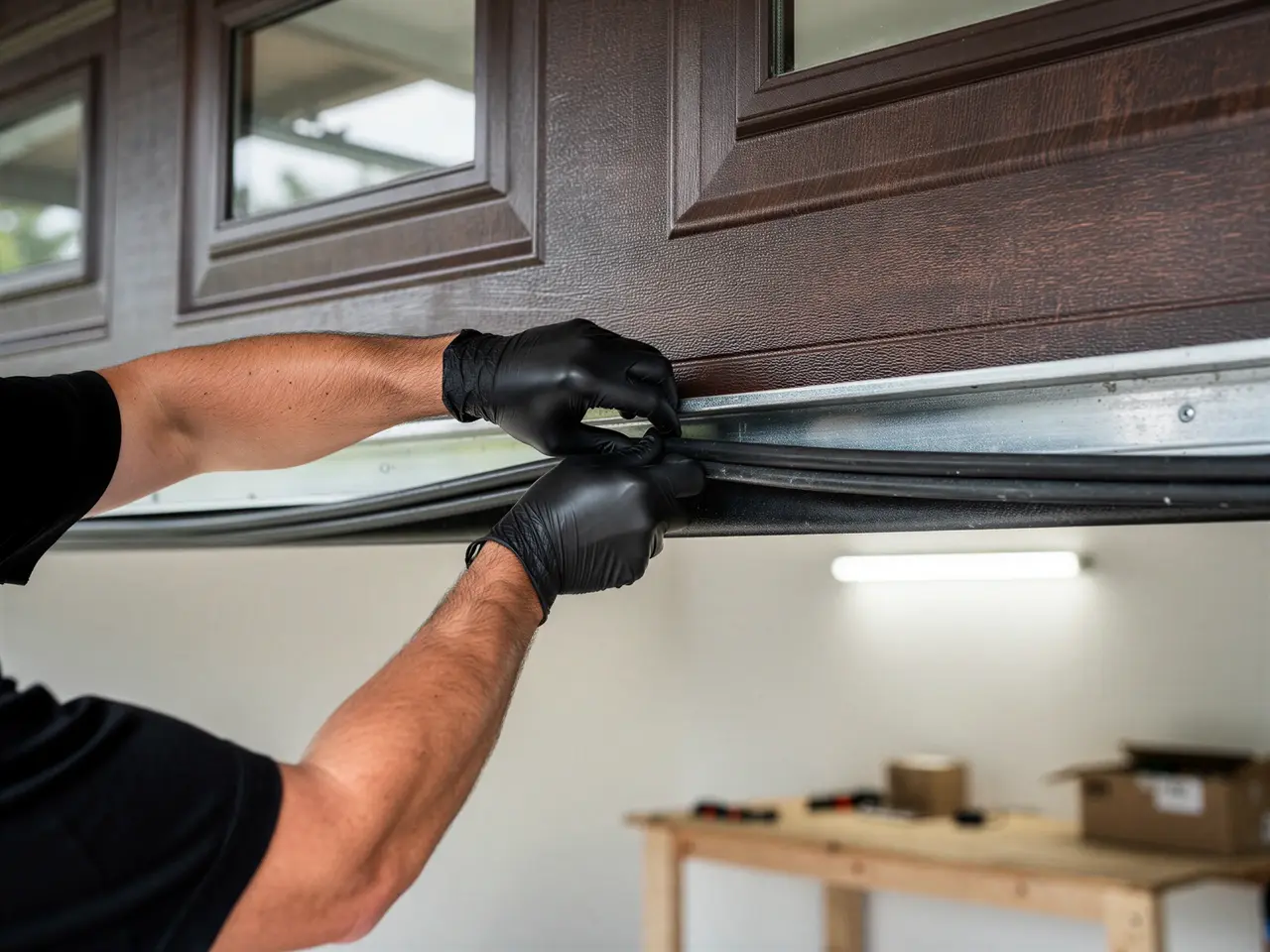
A maintenance visit on a house this age starts with the spring, not the opener, because the spring is doing the actual lifting and the opener is just along for the ride. We check tension, look for flat spots or rust pitting on the coils, and inspect the end bearings and center bracket for play that's crept in over time. From there it's tracks - alignment, lubrication, and whether the rollers running in them are the original steel ones or a later replacement - then cables, hinges, and the weatherstripping at the bottom panel, which on a 1967-era door is often not the panel it shipped with at all. We adjust the opener's force and travel limits last, because those settings drift as the spring loses tension, and resetting them before the spring is right just masks the real problem. On houses where the hardware really is original, we're often working with parts and spacing that newer code-compliant doors don't use, so some of this is judgment calls made on site rather than a checklist.
What You Pay
We don't have a flat number to quote here, and we're not going to make one up. What we can say is that at a median household income of $73,903 in West Warwick - noticeably below the $99,359 median across the wider area we cover from Providence - a lot of owners here are weighing a maintenance visit against a full opener or door replacement, and the math usually favors maintenance first. A tune-up on original 1967-era hardware tends to turn up smaller fixes than people expect: a lubrication and adjustment visit, maybe a roller or hinge swap, rather than a full spring replacement every time. The spring itself is the one component where cost jumps if it's actually failing rather than just aging, since a broken torsion spring on a double door is a different job than tightening a loose track bracket.
Parts We Carry
On a truck headed to West Warwick we carry what fits houses built in that late-1960s window: torsion springs in the sizes common to that era's single and double doors, steel rollers (and nylon ones for owners who want the quieter upgrade), end bearings, lift cables, and standard hinge sets. We also stock the fasteners and brackets that older track systems use, since some of what's on a 1967 door has been superseded on newer models and isn't something you'll find at a typical hardware store. What we don't carry on the truck is custom-width panels or anything requiring a manufacturer order - if a section of the door itself needs replacing rather than the hardware around it, that part gets ordered and the job gets scheduled in two visits instead of one.
How Long You Are Without the Door
A standard maintenance visit doesn't take the door out of service at all - you can open and close it between steps, and it's functional the whole time we're working. If the visit turns up a spring that needs replacing, the door is out of commission for that portion of the job, typically long enough to swap the spring, reset the cables, and recheck balance before we leave. Where it stretches out is when original hardware on a house this age turns out to be a size or style that needs ordering rather than something on the truck - that's the one real limitation here, and it's worth knowing going in rather than finding out mid-job.
Where This Job Goes Sideways
The trouble spot on 1967-era doors is usually the track-to-jamb mounting, not the parts that get attention - spring, cable, opener. Over fifty-plus years the wood framing behind the track mounts can shift or soften slightly, especially in a house that's never had the garage touched, and the track itself can be out of true in a way that isn't obvious until the new hardware goes in and the door still runs rough. When that happens, tightening or replacing the visible parts doesn't fix it, because the problem is the structure the track is bolted to. We'll flag that on site rather than keep adjusting components that aren't actually the issue - on an older house, chasing the symptom instead of the mount is how a maintenance visit turns into a return trip.
Frequently asked questions
Is my garage door's hardware actually original if the house was built in 1967?
It's common, though not guaranteed. A lot of West Warwick houses from that era still have their original torsion spring, track, and hinges because homeowners typically only replace what breaks. If nothing's failed outright, there's a good chance what's in the garage now dates back close to the build year - which is exactly what a maintenance check is meant to catch before it fails.
How often should a door this old get serviced?
We don't have a fixed interval to give you that fits every door, since it depends on usage and what's already been replaced. What we can say is that hardware from the 1960s has had decades of cold-weather cycling, which accelerates wear on springs and rollers, so an older door benefits from being checked more often than a newer one would.
Do you carry parts for a 1960s door on the truck?
Springs, rollers, cables, bearings, and hinge sets in the sizes common to that era are standard stock. What's not on the truck is a replacement panel or anything custom - that gets ordered separately if the door section itself, rather than the hardware, turns out to be the problem.
Why would a tune-up not fix a rough-running older door?
Sometimes the issue isn't the spring or track hardware at all - it's the wood framing the track is mounted to, which can shift slightly over fifty-plus years. Replacing or adjusting the visible parts won't fix that. We'll tell you on site if that looks like what's going on rather than keep swapping parts that aren't the real cause.
More garage door services in West Warwick
Book garage door service in Providence
Call now or request a quote - tell us what the door is doing and where you are.