
Providence, RI · Garage Door Service
Garage Door Repair for Smithfield Homes
Smithfield's housing dates mostly to the 1970s, which means specific spring and opener failures. We cover the 8-mile run from Providence for repair calls here.
- Repairs & new doors
- Springs & openers
- Serving 7 nearby communities
Doing It Yourself
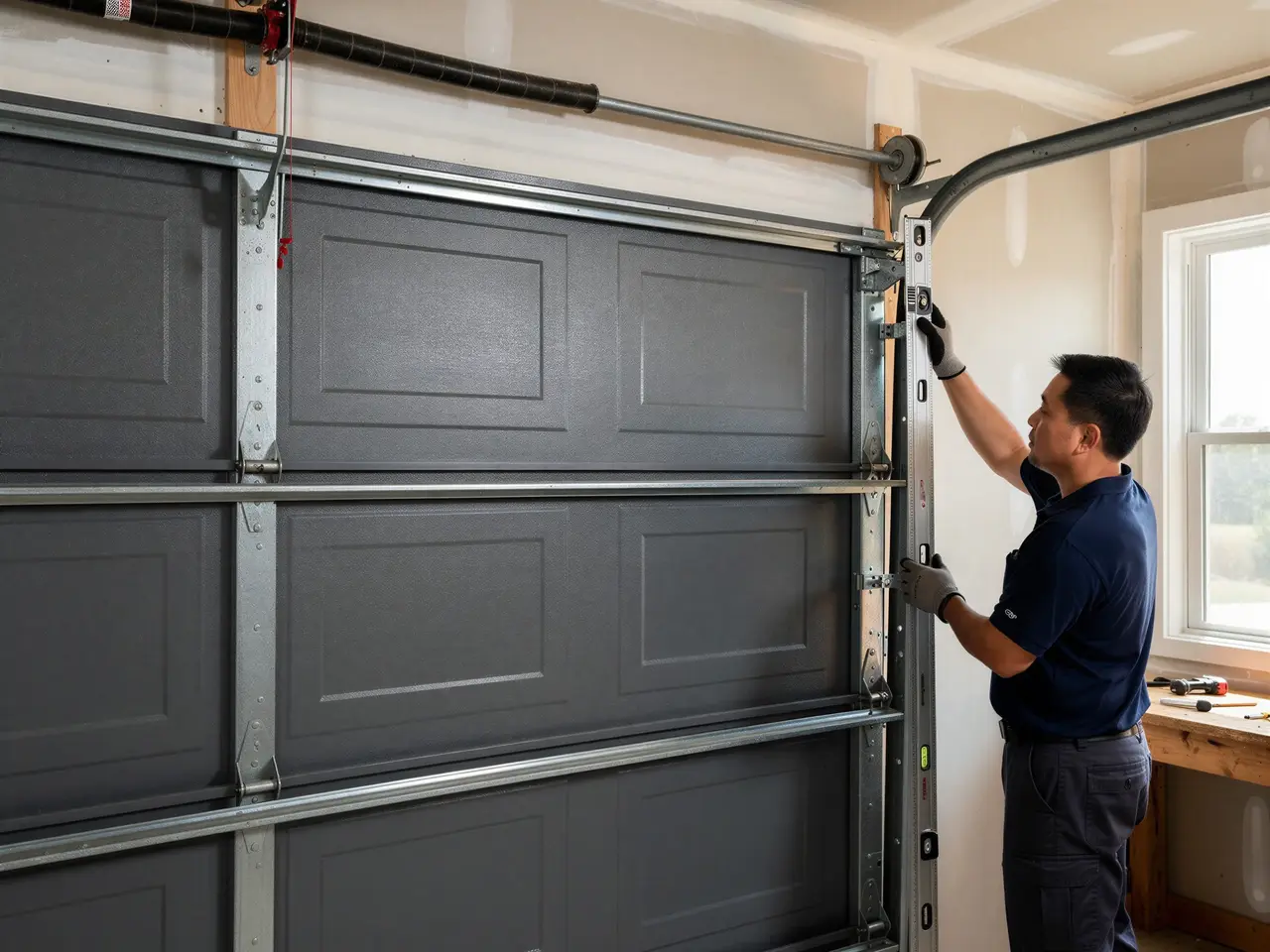
Smithfield has about 7,797 households, which is small enough that most of the repair calls we get from this side of the service area cluster around the same handful of problems rather than a wide spread of weird one-offs. That's useful to know before you grab a wrench. A loose roller or a dragging track you can often sort yourself with a socket set and ten minutes. A spring under tension is a different animal entirely - torsion springs store enough force to break a wrist or worse, and we won't pretend otherwise. If the door won't budge, or it slams down instead of lowering, stop and call someone. That's not a sales pitch, it's just where the line sits between a Saturday job and an ER visit. Openers are usually safer to poke at - a dead remote or a sensor knocked out of alignment is often a five-minute fix with no spring involved. If you're not sure which kind of problem you're looking at, that uncertainty itself is the answer: leave it.
The Symptom
The median home in Smithfield was built around 1976, which puts a lot of these garages squarely in the era of steel sectional doors, early torsion or extension-spring setups, and chain-drive openers that have since been replaced two or three times over. The symptom we hear most from this stretch is a door that's noticeably heavier to lift by hand than it used to be, or an opener that strains and clicks before giving up partway through the cycle. That's usually a spring losing tension, not a motor problem, even though the motor is what sounds like it's failing. Rhode Island's cold winters add their own wrinkle: stiff grease and metal that contracts in low temperatures makes a weak spring's failure point show up first on the coldest mornings of the year, not gradually.
Where This Job Goes Sideways
The trouble with 1970s-built garages is mismatched hardware. A door gets replaced at some point but the track or the opener doesn't, or the reverse - and now you've got a newer opener bolted to an original frame that was never squared for it. We see this on a lot of homes from Smithfield's era. It looks like a simple fix until you're three bolts in and realize the mounting bracket is bent, not the spring. Another spot this goes wrong: extension springs on older setups rust and seize in a cold, damp garage, and when they finally let go they can whip the cable instead of breaking clean. If a tech tells you the job grew once they opened the panel, that's usually why - not an upsell, an honest surprise buried in forty-plus-year-old hardware.
How Long You Are Without the Door
We run this call from Providence, about 8 miles out, so factor the drive into your expectations - we don't keep a branch or a crew staged in Smithfield itself. Once the truck arrives, most spring and cable jobs close out the same visit since the parts involved are common stock. Opener boards and some older extension-spring hardware specific to houses from the 1970s can take longer to source if the part's been discontinued, which happens more often the older the installed unit is. We'll tell you on the spot if we're waiting on a part rather than letting you assume the truck is just running late.
How We Fix It
First call is diagnostic, not guesswork: we check spring tension, track alignment, and the opener's force settings before touching anything, because on a door this age the actual failure is often one step removed from the obvious symptom. Torsion conversions are common on homes built before extension springs fell out of favor - if your door's still running the original extension setup and it's failed once already, we'll tell you straight whether a patch repair or a spring-system swap makes more sense long-term. We don't push replacement on a door that just needs new rollers and a tune. But we also won't keep patching a cable system that's going to strand you again in six months just to avoid the bigger conversation.
What You Pay
We don't publish a flat number here because spring jobs, cable jobs, and opener-board swaps price out differently, and a door from the 1970s sometimes needs a part that costs more to track down than a current one would. What we can tell you is that the diagnostic visit itself tells you where you stand before any repair work starts, so you're not committing to a number blind. If a straight repair isn't worth it against buying a new door - which happens more on original 1970s-era doors than newer ones - we'll say so rather than run up a bill on a door that's past the point of patching.
Frequently asked questions
Why is my garage door so heavy to lift in winter?
Cold stiffens the grease in the spring and track hardware, and on an older torsion or extension system that's already losing tension, that extra resistance is often what finally reveals the failure. It's rarely the cold alone - it's the cold exposing a spring that was already near the end of its life.
Do you have a local crew based in Smithfield?
No. We run this call out of Providence, about 8 miles away. There's no separate branch or staged truck in Smithfield - we just drive out for the job.
Is it worth repairing a door built when my house was, around the mid-1970s?
Sometimes. If the panels and track are sound and it's just a spring or cable, repair makes sense. If you're chasing discontinued parts for an opener or an extension-spring system that keeps failing, replacement usually costs less over time than repeat repairs.
More garage door services in Smithfield
Book garage door service in Providence
Call now or request a quote - tell us what the door is doing and where you are.