
Providence, RI · Garage Door Service
What a Technician Checks First in Providence Homes
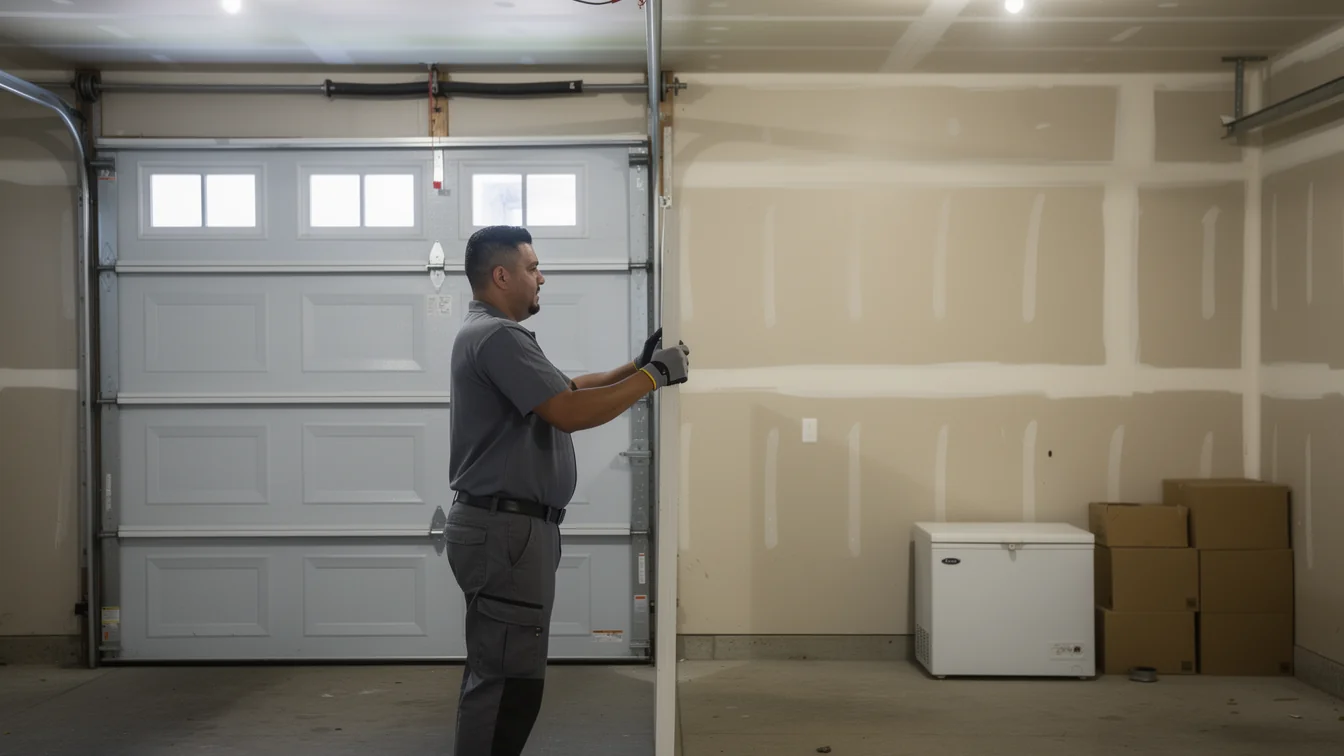
A look at what a Providence Garage Door Pros tech checks first on a service call, tied to the city's 1938-1989 housing stock and cold-climate wear patterns.
- Repairs & new doors
- Springs & openers
- Serving 7 nearby communities
How Local Conditions Play In
Most of the houses we get called to in Providence and the close-in areas like Mount Pleasant, Hope, Washington Park, and Edgewood went up between 1938 and 1989, with the median build year sitting around 1970. That matters because a door built or last replaced in that window is almost always on a torsion spring system installed before galvanized cable became standard, and the opener, if it's even original, predates anything with a safety reversal sensor worth trusting. The first thing a tech does on a call in this city isn't look at the door panel - it's look at the header and track mounting, because houses from this era often have the spring anchored into framing that's shifted a half-inch or more over fifty-plus years. In the Blackstone Boulevard Realty Plat Historic District and similar older blocks, we also check whether the original wood jamb is still carrying hardware it was never rated for after decades of seasonal swelling. None of this is dramatic. It's just what you find when a city's housing stock skews this old - the fix usually starts with the mounting, not the moving parts.
Where People Go Wrong
The most common mistake we see across Providence - from Downtown out to Riverside and Rumford - is someone replacing a broken spring or noisy roller without checking whether the track itself is still square to a header that's settled. On 1960s and 70s construction, which covers most of the 34 named areas we work across, the track brackets were often lag-bolted directly into framing that has since dried and moved. Swap the spring and leave a track that's a quarter-inch out of plumb, and the new spring wears unevenly and fails again inside a year or two. Second mistake: assuming an opener with no battery backup is just old-fashioned rather than a real safety gap, which matters more here given how often winter storms knock power out for hours at a time. Third: ignoring a door that's gone quiet but heavy - meaning the spring is losing tension, not the opener losing strength. People replace openers when the door itself is doing most of the work the opener was never built to do. We'd rather tell a homeowner the spring is the problem than sell an opener that won't fix it.
The Seasonal Bit
Providence sits in a cold-severe climate band, and that shows up in the hardware before it shows up in the weather report. Steel contracts in deep cold, which tightens tolerances on tracks that are already slightly out of alignment from age - so a door that rolled fine in October can bind or jump the track by January. Lubricant that was fine in summer gets stiff, and a spring under tension in cold steel takes more load to cycle, which is why so many spring failures around here cluster in the first hard cold snap rather than spread evenly through the year. We also see weatherstripping at the bottom panel fail faster on older doors, letting cold air and road salt spray into the garage, which accelerates rust on cable and bottom brackets. None of this is about one storm or one week - it's the pattern of a cold-severe climate working on 50-to-80-year-old hardware, year after year, until something gives.
What Is Going On
Put the housing age and the climate together and you get a fairly consistent story on most calls in Providence: original or early-replacement torsion hardware, mounted into framing that has moved over decades, cycling through hard winters that tighten tolerances and accelerate rust. That's what a tech is actually checking for on arrival - not just "is the door broken" but which of those three layers is driving the failure. Sometimes it's straightforward, a cable that's rusted through and needs swapping. Sometimes the honest answer is that the door and track are original from a 1960s build and patching one part just delays the next failure by a season. We'll say that plainly when it's true rather than keep selling small fixes on a system that's past the point where small fixes hold.
Frequently asked questions
Why does my garage door get noisy every winter?
In a cold-severe climate like Providence's, steel tracks and springs contract and stiffen in deep cold. If the track was already slightly out of alignment - common in homes built between 1938 and 1989 - the cold tightens that tolerance further, which shows up as grinding, jumping, or a door that sticks partway through its cycle.
Is my opener too old to trust?
If your house is part of Providence's typical 1960s-70s stock and the opener is original, it almost certainly lacks a safety reversal sensor and battery backup. We'd check the opener's age and function before touching anything else, since that's a real safety gap, not just an inconvenience.
Why did my spring break right after a cold snap and not before?
Cold steel needs more force to cycle under tension, so a spring that's been slowly wearing down often lets go during the season's first hard freeze rather than failing gradually. It's the cold exposing weakness that was already there, not causing new damage on its own.
Should I replace the whole door or just fix the spring?
Depends on what the track and mounting look like underneath. On a lot of the older housing stock we see across the city, the spring is the symptom and a shifted header or rusted track is the cause - fixing just the spring in that case means doing the job again within a year or two.
Related garage door services in Providence
More garage door guides
Book garage door service in Providence
Call now or request a quote - tell us what the door is doing and where you are.