Providence, RI · Garage Door Service
Garage Door Service for Warwick's 1960s Housing Stock
Warwick homes mostly date to 1961, a decade older than the area median. That age shows up in spring size, panel weight, and track clearance. We cover Warwick from Providence.
- Repairs & new doors
- Springs & openers
- Serving 7 nearby communities
How Long You Are Without the Door
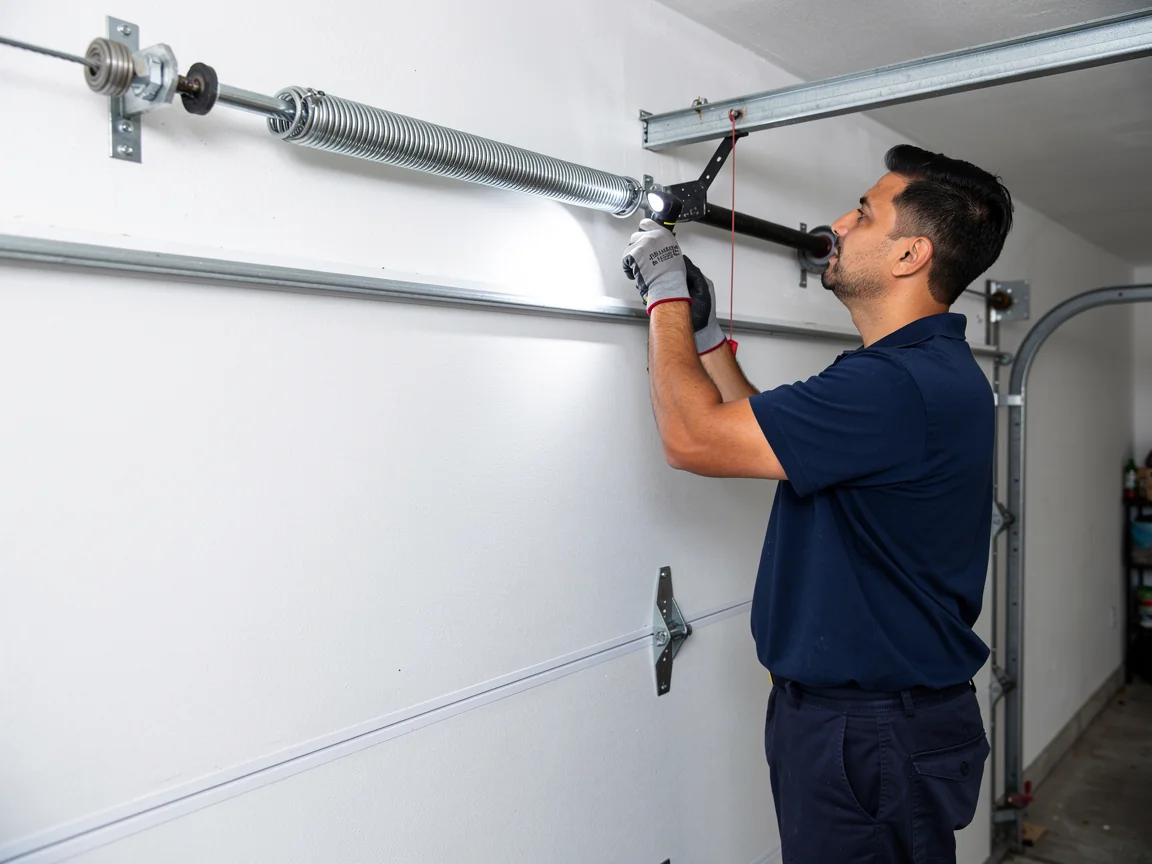
The honest answer depends on what's wrong and what's on the truck that day, and we're not going to promise a number we can't back up from Providence. What we can tell you is what usually breaks here. Warwick's housing stock centers on a median build year of 1961 - nearly a decade earlier than the 1970 median across the rest of the service area covered by F1. That gap matters because a door install from 1961 is more likely to still be running original hardware: steel torsion springs sized for a lighter door, tracks set to tolerances that don't match what's sold off the shelf today. If a spring lets go on a door that old, we're not just swapping a spring, we're often checking whether the drum and cable are even the modern stud pattern. That adds time to the call, not because we're slow, but because the parts don't always bolt straight on.
We travel the 8 miles out from Providence for every Warwick call, so the door is down for as long as it takes us to diagnose it right the first time. We don't stage a truck in Warwick and we won't claim otherwise - what we will do is show up with the parts a 1960s torsion setup is likely to need, because we've priced that risk in before we leave the shop.
Where This Job Goes Sideways
The failure mode that catches people out in Warwick is assuming a modern spring or opener kit will drop into a 1961-era setup. It often won't. Extension spring systems from that build era used different anchor points and safety cable routing than what's standard now, and a panel built before insulation was common runs heavier per square foot than a comparable door made in the last fifteen years. Put a light modern spring on a heavy old panel and it'll feel fine for a few weeks, then the door starts sagging on one side.
Rhode Island's cold band is the other variable. A door that's run fine for fifty winters can seize at the rollers the first really hard freeze after a seal has quietly failed, and a homeowner in a 1961 house doesn't always know the weatherstrip was never replaced. We check that on every call here, not as an upsell, but because it's the thing most likely to be the actual cause of a door that 'won't open right' in January.
The Symptom
Most Warwick calls start the same way: the door is noisy, slow, or crooked, and the owner assumes it's the opener. Nine times out of ten on a house from this era, the opener is the last thing we look at. We're checking the spring tension first, then the track alignment, then whether the rollers are original steel on an original track - because steel-on-steel from 1961 wears a groove pattern that nylon rollers never developed, and that groove throws the door off level in a way that looks electrical but isn't.
If the door reverses partway or won't close all the way, that's almost always a track or spring issue on houses this age, not a sensor problem, even though sensors get blamed first because they're the newest-looking part on the door.
How We Fix It
We start by measuring what's actually on the door - spring wire size, drum diameter, track gauge - against what the house would have shipped with around 1961, rather than assuming it matches a catalog part. Where the original hardware is sound, we service it rather than replace it; there's no reason to pull a track that's still true just because it's old. Where the spring or cable has reached the end of its life, we replace with hardware rated for the actual door weight, not a generic size.
One limit worth being upfront about: if the panel itself is delaminating or the steel has rusted through at the bottom section, we'll tell you that a repair isn't worth sinking money into, and we'll say so before we start charging for parts. That's not a call we make to sell a bigger job - a 1960s panel in that condition usually costs more to patch twice than to replace once.
Getting It Booked In
We run Warwick calls out of our Providence base, about 8 miles in. There's no local branch or storage yard here, so what changes call to call is which parts we bring, and we size that based on what you tell us when you call - door age, symptom, whether it's a torsion or extension setup if you know. If you don't know, that's fine; we ask the right questions to figure it out before the truck leaves. Have a look at our Warwick page for what else we cover in town, or see the full rundown of services from our Providence page if you're comparing options before you call.
Frequently asked questions
Why does my 1960s Warwick garage door need different parts than a newer house?
Houses built around 1961 often used torsion or extension spring hardware sized differently than what's sold today, with track gauges and anchor points that don't always match modern stock parts. We check the original specs before ordering, which can mean a slightly longer first visit but the right fix the first time.
Do you keep a truck stationed in Warwick?
No. We cover Warwick from our base in Providence, about 8 miles away. We don't run a local depot or storage yard in town, so every call is staged from Providence with parts chosen based on what you describe when you book.
Is it worth repairing an original 1960s panel instead of replacing it?
Sometimes, and sometimes not. If the steel is rusted through at the bottom section or the panel is delaminating, patching it usually costs more over time than replacing it once. We'll tell you straight if that's what we're looking at before we start any work.
Book garage door service in Providence
Call now or request a quote - tell us what the door is doing and where you are.